Systems & Creative Engineering

THIS IS
MICHAEL.

I build at the intersection of software, security, and experimentation.

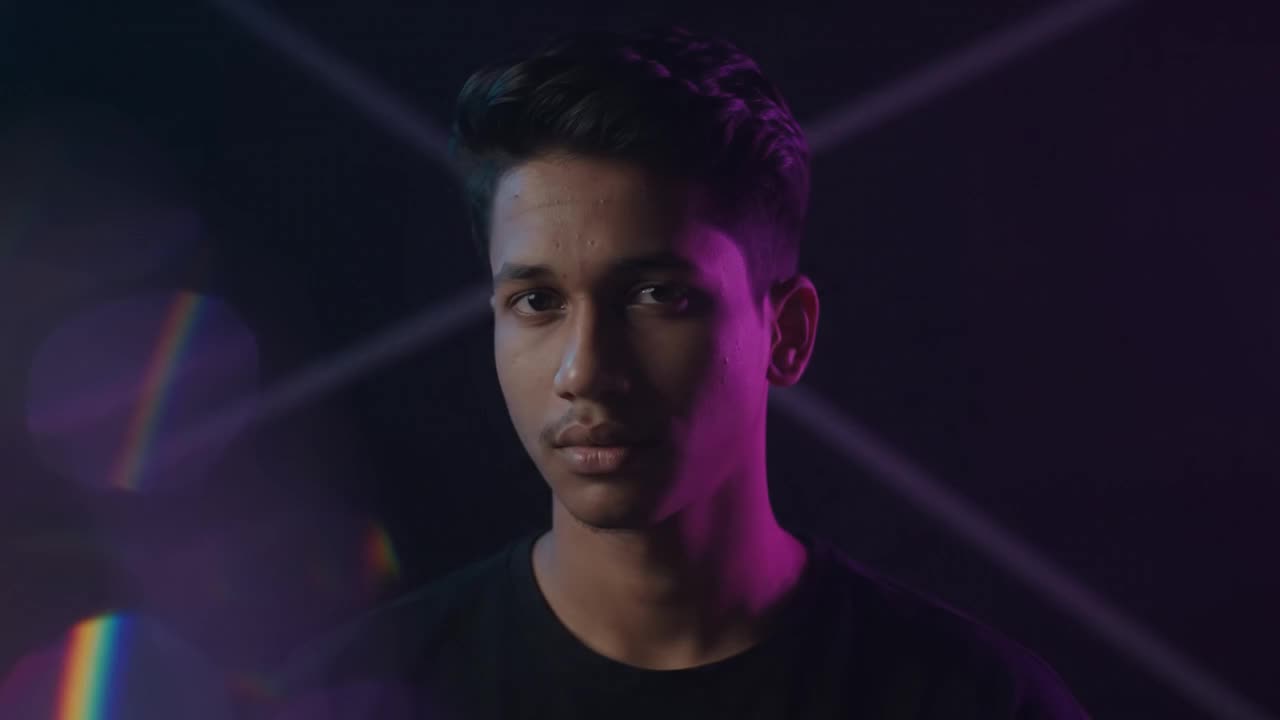
Michael Shah Portrait
PORTRAIT // ARCHIVE
MICHAEL SHAH
SCROLL TO EXPLORE
01 // ARCHITECTURAL PROJECTS & CASE STUDIES

Selected Work

Core systems, extensions, and security tools engineered to solve specific constraints across networking, AI quota management, and digital media verification.

01 // WORK|Cloud Systems / File Transfer|Active Prototype

GhostShare

Network-Independent Cloud-Relayed File Transfer

ROLE: System Architecture & Implementation
Cloudflare PagesCloudflare R2Cloudflare KVTemporary StorageEdge Computing
THE PROBLEM BEING SOLVED

Campus Wi-Fi networks and cellular data connections are often segmented, preventing peer-to-peer or local network file transfers between student devices.

WHAT I BUILT // TECHNICAL IMPLEMENTATION

Constructed a zero-authentication, cloud-relayed file transfer utility that buffers temporary file payloads in object storage and coordinates exchange via short-lived ephemeral key pairs.

KEY TECHNICAL CONCEPT

Stateless relay architecture using edge key-value storage and object storage lifecycle policies to eliminate persistent server footprint.
02 // WORK|Browser Extension / WebExtensions|Active Development

AI Limit

Browser Extension for AI Usage Visibility

ROLE: Extension Architecture & Frontend
TypeScriptWebExtensions APILLM Quota TrackingClient-Side StateAPIs
THE PROBLEM BEING SOLVED

Developers and students using multiple AI providers (ChatGPT, Claude, Gemini, Copilot) frequently hit unexpected usage cutoffs due to opaque, fragmented quota windows.

WHAT I BUILT // TECHNICAL IMPLEMENTATION

Engineered a browser extension that tracks active AI sessions, observes local interaction cadence, and presents unified visibility over rate limits and quota resets.

KEY TECHNICAL CONCEPT

Client-side interaction monitoring without transmitting user prompts or session credentials to external third parties.

03 // WORK|Computer Vision / Security|Research Prototype

DeepTrust

Synthetic Video & Deepfake Detection Prototype

ROLE: Concept Exploration & Prototype
AI / Computer VisionCybersecurityVideo AuthenticityHeuristic AnalysisPrototype
THE PROBLEM BEING SOLVED

Synthetic media and real-time deepfakes pose emerging verification risks in remote video communications and online identity verification.

WHAT I BUILT // TECHNICAL IMPLEMENTATION

Developed an experimental prototype investigating browser-accessible visual heuristics and frame artifact detection for video conferencing feeds (Google Meet, Zoom).

KEY TECHNICAL CONCEPT

Lightweight spatial and temporal heuristic evaluation of facial boundary coherence to spot anomalous synthetic blending in video streams.

02 // EXPERIMENTS & PROTOTYPES

The Lab

I don't only build finished products. I experiment — exploring networking protocols, Linux internals, cybersecurity tooling, machine learning, and interactive computational models.

physics-onlinePublic Project

Interactive physics and scientific visualization project exploring browser-based computational models and canvas rendering.

Physics / Scientific Visualization

Machine learning experiments and pattern recognition involving simulated network traffic flows and packet telemetry.

Machine Learning / Network Data

Automated network scanning scripts and service signature analysis for hands-on cybersecurity learning and port posture assessment.

Cybersecurity / Nmap / Python

Hands-on explorations of Linux operating system mechanics, process isolation, namespace boundaries, and shell pipelines.

Linux / Systems / Runtimes
03 // TECHNICAL TOOLKIT

Technical Skills

Technologies, tools, and environments I work with and study. Categorized by domain with honest assessment of working depth rather than arbitrary percentages.

DOMAIN // 016 TECHNOLOGIES

PROGRAMMING

Core languages used for systems construction, scripting, and application engineering.

Python[Intermediate]
Java[Intermediate]
C[Intermediate]
Linux / Bash / Shell Scripting[Intermediate]
C++[Beginner / Learning]
JavaScript / TypeScript[Beginner / Learning]
SYSTEM STATUSACTIVE PRACTICE
DOMAIN // 027 TECHNOLOGIES

CYBERSECURITY

Offensive fundamentals, network traffic auditing, and defensive vulnerability inspection.

Kali Linux[Working Knowledge]
Wireshark[Working Knowledge]
Nmap[Working Knowledge]
Linux Security[Working Knowledge]
Networking Protocols[Working Knowledge]
Vulnerability Assessment[Working Knowledge]
Ethical Hacking Fundamentals[Working Knowledge]
SYSTEM STATUSACTIVE PRACTICE
DOMAIN // 035 TECHNOLOGIES

SYSTEMS & NETWORKING

Low-level execution environments, operating system mechanics, and protocol architecture.

Linux OS Internals[Working Knowledge]
Computer Architecture[Working Knowledge]
TCP/IP & UDP Protocols[Working Knowledge]
Shell / Bash Scripting[Intermediate]
Process & Memory Models[Working Knowledge]
SYSTEM STATUSACTIVE PRACTICE
DOMAIN // 045 TECHNOLOGIES

WEB & SOFTWARE

Modern web standards, modular UI architecture, and version control workflows.

HTML & Modern CSS[Working Knowledge]
React / Next.js[Beginner / Learning]
WebExtensions API[Beginner / Learning]
Git & GitHub[Working Knowledge]
REST APIs & JSON[Working Knowledge]
SYSTEM STATUSACTIVE PRACTICE
DOMAIN // 055 TECHNOLOGIES

DATA & AI

Pattern recognition, practical machine learning pipelines, and generative AI tool integration.

Python Data Stack[Working Knowledge]
scikit-learn[Beginner / Learning]
Machine Learning Fundamentals[Beginner / Learning]
LLM APIs & Prompt Architecture[Working Knowledge]
Computer Vision Fundamentals[Beginner / Learning]
SYSTEM STATUSACTIVE PRACTICE
05 // PERSONAL IDENTITY & PHILOSOPHY

About Michael

I am a Computer Science student exploring the intersection of practical software engineering, cybersecurity, systems internals, and experimental technology.

Currently pursuing a Bachelor of Technology (B.Tech) in Computer Science and Engineering at Jain University, Faculty of Engineering and Technology (FET). My academic studies provide the formal framework in algorithmic theory, operating systems, and discrete structures, but my deepest learning happens at the terminal.

I operate with a simple conviction: the best way to understand complex systems is to dissect and build them from scratch. Whether analyzing raw network packets in Wireshark, inspecting memory and process isolation under Linux, or engineering zero-authentication cloud utilities to bypass real campus connectivity restrictions, I care about how technology works beneath the abstraction layers.

My engineering interests center around security fundamentals, network defense, reliable software construction, and understanding how modern AI models interact with client environments. Rather than rushing toward pre-packaged solutions, I take time to understand the protocol, the failure modes, and the trust boundaries.

ENGINEERING PERSPECTIVE
01 // FIRST PRINCIPLES

Prioritizing understanding of network protocols, system calls, and runtime memory before adopting high-level frameworks.

02 // REAL-WORLD UTILITY

Building tools that solve tangible problems — like segmented campus Wi-Fi transfers and client-side AI quota observability.

03 // DEFENSIVE RIGOR

Thinking about threat vectors, trust boundaries, and credential privacy by design in every architecture.

04 // CONTINUOUS EXPERIMENTATION

Maintaining an active lab notebook of computational models, traffic scripts, and prototype utilities.

PERSONAL INTERESTS // BEYOND THE TERMINAL
FootballVolleyballBadmintonFitness & AthleticsSystems ArchitectureVisual Design & Film
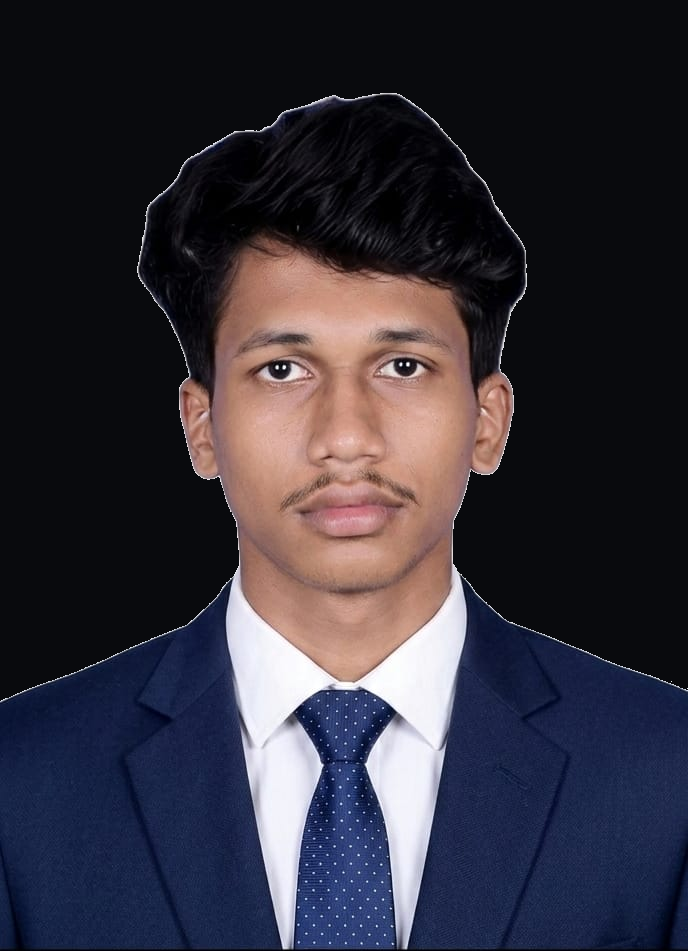
Michael Shah - Computer Science Student at Jain University
MICHAEL SHAHB.Tech CSE // Jain University (FET)